
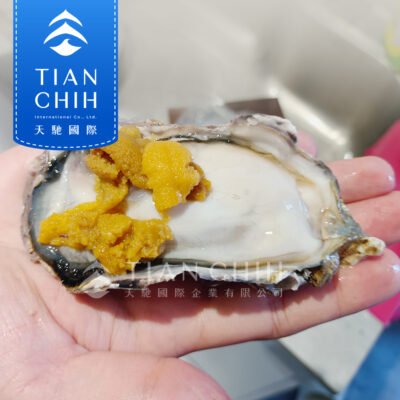
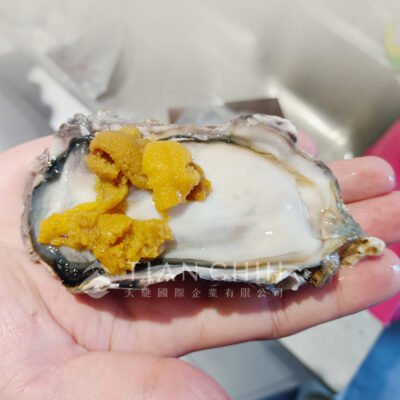
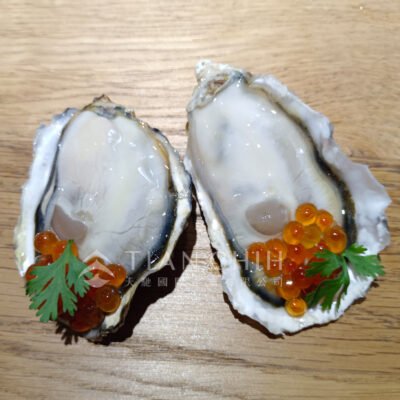
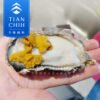
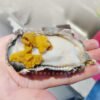
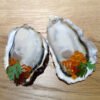
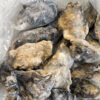
Japanese whole shell oysters
【Specifications】L/2L
【Origin】Hyogo Prefecture, Japan
【Description】
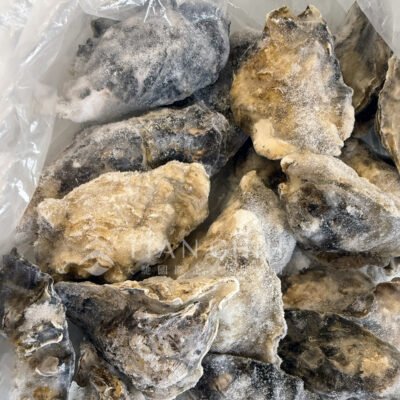
The shell of this whole-shell oyster is thick and hard, mostly grayish-white or grayish-brown, irregularly shaped with slightly serrated edges, and distinct layers and undulations, as if formed by the tides. These patterns record the traces of waves crashing and rocks clinging to the shell. The inside of the shell is white as porcelain, with a pearly luster, reflecting the oyster’s plumpness and freshness. The entire oyster is like a treasure from the seabed. Once opened, it exudes a rich ocean aroma. Oysters are known as “milk of the sea,” rich in high-quality protein, minerals, and various trace elements, making it one of the foods with the highest trace element density in nature.
【Composition】
💎High Protein: A high-quality protein source that is low in fat and calories, containing all nine essential amino acids.
💎Low Fat: Rich in heart-healthy Omega-3 fatty acids (such as EPA and DHA).
💎Zinc: Extremely high in zinc, it’s considered the “King of Zinc” among natural foods, helping to boost immunity, heal wounds, and maintain reproductive function.
💎Vitamin B12: Important for the nervous system and red blood cell production.
💎Iron: Contains easily absorbed heme iron, preventing anemia.
💎Selenium: A powerful antioxidant that helps maintain normal thyroid function.
💎Copper and Manganese: Support bone health and energy metabolism.
💎Antioxidant: Contains D-aspartic acid, which supports hormonal balance.
💎Visceral Components: The green or black parts inside are natural seaweed and phytoplankton consumed, and are safe to eat.